From Flat to Incline: How to Use an Adjustable Bench for Better Strength Training
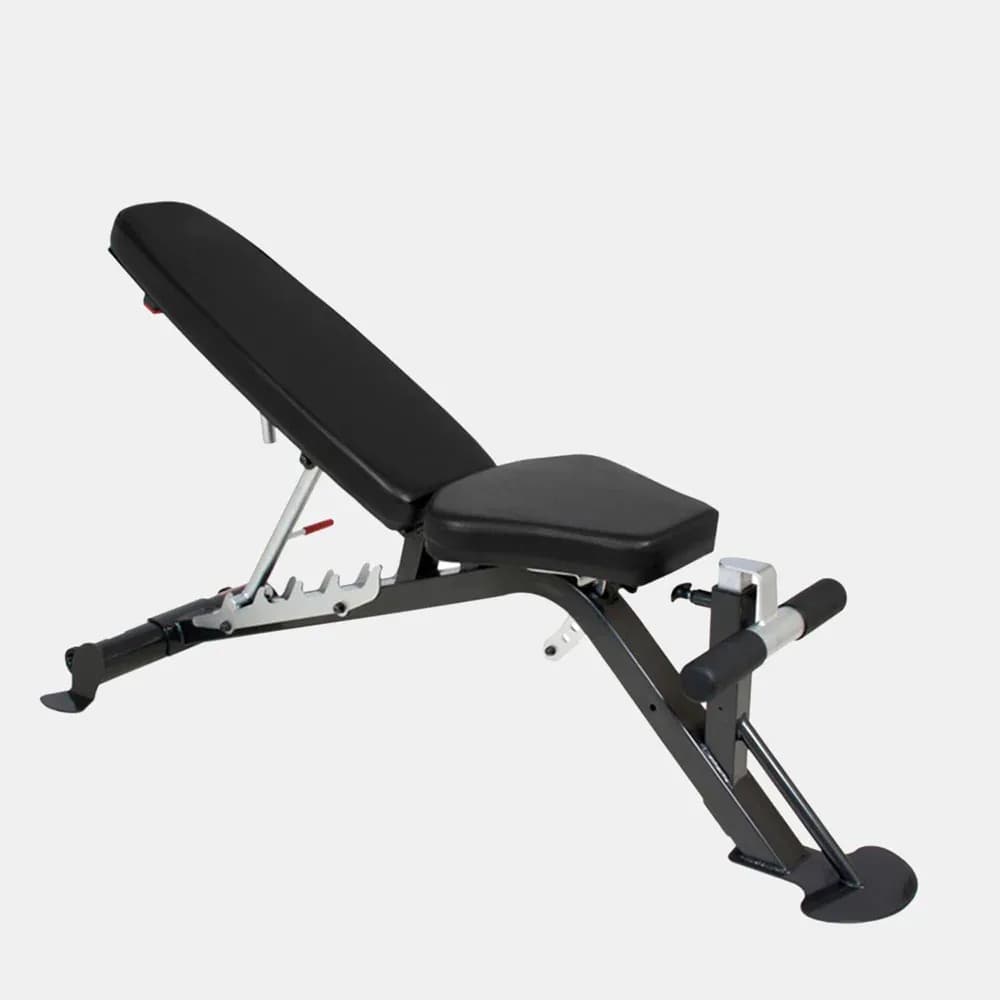
An adjustable bench can look like a straightforward piece of gym equipment.
Change the backrest, place some weights nearby and start exercising.
But the real advantage of an adjustable bench is not simply that it can move into different positions. It allows you to change your body position, which can change how an exercise feels, which muscles contribute, and what kind of training you can perform.
That makes the bench especially useful for people building a strength-focused home gym.
Instead of performing every pressing or dumbbell exercise from the same position, you can create a more varied training setup with one piece of equipment.
For anyone training at home in Dubai, Abu Dhabi, Sharjah, Ajman or elsewhere in the UAE, this can make strength sessions more flexible without requiring a large commercial-style gym.
If you are building a home fitness setup, Athletix offers equipment for strength and training routines across the UAE.
Why Your Body Position Matters
Changing the angle of a bench changes your setup.
A flat position places your torso differently from an inclined position. That can change the movement path of pressing exercises and alter which areas are emphasised.
This does not mean one angle is automatically better than another.
It simply gives you another training option.
For example, a flat dumbbell press and an incline dumbbell press are both pressing exercises, but they are not identical movements.
Having an adjustable bench allows you to include both within your training plan.
Start With the Flat Position
The flat position is an important starting point for many exercises.
It can support movements such as:
- Dumbbell chest presses
- Dumbbell fly variations
- Hip-supported exercises
- Certain core movements
- Some rows
- Other floor-to-bench strength exercises
A flat bench also provides a stable surface for exercises where you want your upper body supported.
When learning a new movement, start with a comfortable position and manageable resistance.
There is no benefit in making an exercise unnecessarily complicated from the beginning.
Then Introduce Incline Training
Once you are comfortable with basic movements, changing the backrest angle creates another option.
An incline position is commonly used for exercises such as incline dumbbell presses.
The exact angle you choose can affect how the movement feels.
You do not necessarily need to use the steepest incline.
A moderate angle may be more comfortable for your training style.
Experiment gradually and pay attention to your movement quality.
The Bench Is a Positioning Tool
This is perhaps the most useful way to think about an adjustable bench.
It is not simply a surface to sit or lie on.
It helps position your body.
That positioning can make certain exercises easier to perform with control.
For example, a supported row can reduce the amount of work required from your torso compared with a standing row, allowing you to concentrate more directly on the pulling movement.
Likewise, changing the bench angle can create different pressing variations.
This gives you more ways to train without constantly adding new equipment.
Build Your Upper-Body Session Around the Bench
An adjustable bench can become the centre of an upper-body workout.
You could structure a session around:
Pressing
Flat or incline dumbbell press.
Pulling
Chest-supported row.
Shoulders
Seated dumbbell press.
Arms
Seated curls or triceps exercises.
The bench provides a stable position for several of these movements.
You can therefore move from one exercise to another without completely changing your workout environment.
Seated Pressing Requires a Stable Setup
A seated shoulder press is another useful example.
Instead of standing, you can sit against the bench backrest and press the weights overhead.
This can provide a different training experience from a standing press.
The backrest also gives you a consistent position.
However, the bench should be properly adjusted and stable before you begin.
Do not start a heavy set while the backrest is still being adjusted.
Chest-Supported Rows Add Another Option
Rows are an important part of balanced upper-body training.
With an adjustable bench, you can use a supported position for certain rowing variations.
This can be particularly useful when you want to reduce unnecessary body movement.
A stable setup allows you to concentrate on pulling the weight through a controlled range of motion.
Again, the purpose is not to say that supported rows are superior to every other row.
They simply give you another option.
Use the Bench for Unilateral Training
One of the most useful features of dumbbell training is the ability to work one side at a time.
The bench can support this approach.
For example, you can perform:
- One-arm rows
- Supported single-arm exercises
- Split-stance movements
- Single-arm pressing variations
Training one side at a time can introduce variety and allow you to focus on each side independently.
It also means you do not always need two heavy weights to create a challenging exercise.
Do Not Change the Angle Randomly
An adjustable bench gives you many positions.
That does not mean you should constantly change the angle.
Choose the position that suits the exercise.
Then focus on performing the movement correctly.
For example:
Flat position: Useful for flat pressing and several supported movements.
Low incline: Useful for certain incline pressing variations.
Higher incline: Can be useful for seated exercises and different shoulder-focused movements.
The exact setting depends on the exercise, your body proportions and your comfort.
The goal is purposeful adjustment rather than constant adjustment.
How to Find a Comfortable Bench Angle
There is no single number that every person must use.
Instead, start with a conservative position.
Perform a few controlled repetitions.
Ask yourself:
- Does the position feel stable?
- Can I move naturally?
- Is my back supported properly?
- Can I control the weights?
- Does the movement feel comfortable?
- Can I maintain the same setup throughout the set?
If the position does not feel right, adjust it.
Your bench should support the exercise rather than force you into an awkward position.
Progressive Overload Is More Than Adding Weight
Strength training often involves gradually increasing the challenge.
Adding weight is one way to do that.
But it is not the only method.
You can also progress by:
- Performing more repetitions
- Adding a set
- Improving technique
- Increasing range of motion where appropriate
- Controlling the lowering phase
- Reducing unnecessary assistance
- Using a more challenging variation
An adjustable bench gives you another progression variable: exercise position.
You might begin with a movement that feels comfortable on a flat setup and later introduce an incline variation.
That can provide a new challenge without simply adding more weight.
Keep a Record of Your Workouts
If you want to make your strength training more systematic, record what you do.
You could track:
- Exercise
- Weight
- Repetitions
- Sets
- Bench position
- Rest time
- Notes about technique
The bench position is worth recording for exercises where the angle changes.
That way, you can reproduce the same setup during your next session instead of guessing.
Over several weeks, your training log can show whether you are actually progressing.
The Bench Can Support More Than Chest Training
It is easy to associate an adjustable bench with chest workouts.
But its usefulness extends beyond pressing.
You can use it for:
Back Training
Supported rows and other pulling movements.
Shoulder Training
Seated pressing and other controlled exercises.
Arm Training
Seated curls and triceps variations.
Lower-Body Training
Split squats, step-up variations and other movements where appropriate.
Core Training
Certain supported core exercises.
This makes the bench a useful connection between several parts of a home strength program.
Add Dumbbells for Maximum Flexibility
A bench becomes much more versatile when paired with dumbbells.
The combination allows you to change both the body position and resistance.
For example:
Flat bench + moderate dumbbells
A straightforward pressing setup.
Incline bench + lighter dumbbells
A different pressing challenge.
Bench support + dumbbell row
A supported pulling movement.
Seated bench + dumbbells
Several shoulder and arm exercises.
This combination can cover a substantial portion of an upper-body home workout.
Think About Stability Before Weight
Before increasing resistance, check the setup.
The bench should sit securely on the floor.
The adjustment mechanism should be properly locked.
The backrest should not move unexpectedly.
Your feet should have a stable position for the exercise.
These details become increasingly important as resistance increases.
A strong workout begins with a reliable setup.
What to Look for in an Adjustable Bench
When comparing Adjustable Benches, look beyond the number of positions.
Adjustment Mechanism
The settings should be practical to change and lock securely.
Stability
The frame should feel solid during normal training.
Padding
The surface should provide adequate support without making you feel unstable.
Backrest Design
Consider whether the available positions suit the exercises you expect to perform.
Seat Adjustment
Some designs allow the seat angle to change as well, which may be useful for certain pressing positions.
Weight Capacity
Check the manufacturer's stated capacity and consider your body weight plus the resistance being used.
Footprint
Make sure the bench fits comfortably in your available training area.
These factors matter more than simply choosing the bench with the largest number of adjustment settings.
A Bench for a Progressive Home Program
Imagine you are starting with a basic home strength routine.
At first, you may perform:
- Flat dumbbell press
- One-arm row
- Seated shoulder press
- Dumbbell curl
- Split squat
As you become more comfortable, you can introduce different angles and variations.
The equipment has not changed.
Your use of it has.
That is one of the strongest arguments for choosing versatile equipment when building a home gym.
Avoid Turning Every Workout Into a Test
There is a temptation to increase the weight every session.
That is not always necessary.
Some workouts should focus on technique and consistency.
Other sessions can focus on progressive loading.
Your performance can also vary from day to day.
Sleep, work, stress and general fatigue can all influence how a workout feels.
If a particular weight feels unusually difficult, there is nothing wrong with keeping the resistance the same or reducing it.
Good training is not about proving something every time you exercise.
Create Different Bench-Based Workouts
You can keep your routine interesting by changing the purpose of each session.
Workout A — Pressing Focus
Flat dumbbell press
Incline dumbbell press
Seated shoulder press
Arm exercise
Workout B — Pulling Focus
Chest-supported row
One-arm row
Rear-delt exercise
Arm exercise
Workout C — Full Body
Dumbbell squat
Bench-supported row
Dumbbell press
Split squat
Carry
The exercises can be adjusted according to your experience and goals.
The point is that one bench can support several distinct sessions.
The UAE Home-Gym Advantage
For many UAE residents, convenience is a major part of home fitness.
A commercial gym may be nearby, but the journey still takes time.
Traffic, work schedules and weather can make a quick workout feel like a much bigger commitment.
A home bench allows you to train whenever your schedule permits.
For someone in Dubai, that might mean an early morning session before work.
In Abu Dhabi, it could be a short evening workout after commuting home.
In Sharjah or Ajman, it could mean using a spare room or compact home-gym area.
The equipment does not have to be elaborate.
It simply needs to make training practical.
Give Yourself Enough Room
Even though a bench does not require an enormous room, you need enough space around it.
Before exercising, make sure:
- You can sit and lie down safely.
- Your dumbbells have room to move.
- Your arms will not hit nearby furniture.
- You can get on and off the bench easily.
- There are no loose cables or objects around your feet.
This becomes particularly important when performing presses or movements involving larger ranges of motion.
Maintain the Bench
Your bench will experience repeated loading.
Check it periodically.
Look at the adjustment mechanism.
Inspect bolts and hardware according to the manufacturer's instructions.
Check the padding for damage.
Make sure the frame remains stable.
If anything feels loose or unusual, address it before continuing to use the equipment.
Basic maintenance can help keep your training setup reliable.
When an Adjustable Bench Makes Sense
An adjustable bench is particularly useful when you want more exercise options from a relatively simple home-gym setup.
It can support different pressing angles, seated exercises, supported rows and several other movements.
It is also useful for people who want to progress beyond basic floor-based dumbbell workouts.
Rather than buying equipment for every individual exercise, you can use the bench to create different positions with the weights you already have.
Final Thoughts
An adjustable bench is not valuable simply because it can move.
Its real value comes from what those different positions allow you to do.
A flat setup can support foundational pressing movements.
An incline can introduce another pressing variation.
A supported position can change the way you perform rows.
A seated position can provide another way to train the shoulders and arms.
Together with dumbbells, the bench can become the foundation for a flexible home strength program.
For home gyms across Dubai, Abu Dhabi, Sharjah, Ajman, Ras Al Khaimah and the wider UAE, that flexibility can be useful when space and time are limited.
Start with the basics.
Learn the correct setup.
Choose sensible resistance.
Record your progress.
Change the bench angle when there is a clear reason to do so.
And build your workouts around movements you can perform consistently.
The goal is not to use every possible bench position.
It is to use the right position for the workout you are doing.